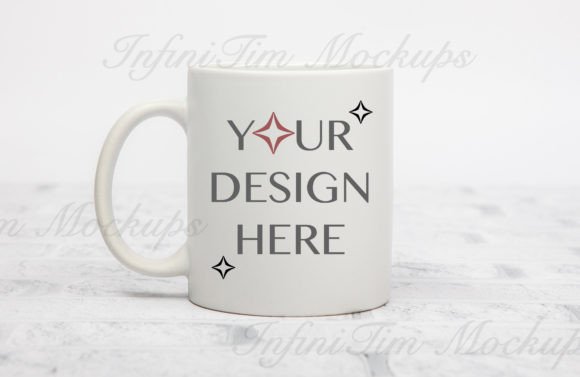
White Mug Mockup 14: Essential Graphics for Mugs Amp
When a client approaches me with a request to refresh their product photography for an upcoming seasonal launch, my first instinct is to evaluate the tools that will sell the vision before a single physical unit is produced. Recently, I had the opportunity to review White Mug Mockup, Mug Mock Up 14 as a potential cornerstone for a boutique coffee brand's rebranding effort. In the fast-paced world of small business branding, the ability to present a polished, realistic concept is often the difference between securing a contract and losing it to a competitor. This asset, categorized under Mugs Amp within the broader scope of Graphics, immediately struck me as a versatile tool for designers who need efficiency without sacrificing aesthetic quality.
First Impressions and Visual Mood
Upon opening the file, the immediate impression is one of clean, modern minimalism. The lighting setup in White Mug Mockup, Mug Mock Up 14 avoids the harsh shadows often found in lower-quality stock photography, opting instead for a soft, diffused glow that highlights the curvature of the ceramic. This creates a mood that is both inviting and professional, perfectly suited for lifestyle brands, artisanal roasters, or handmade businesses looking to elevate their online presence. The white surface of the mug acts as a pristine canvas, ensuring that any logo design or graphic design asset placed upon it remains the focal point. For a designer working on a brand identity project, this neutrality is invaluable; it allows the client's colors and typography to shine without competing with background noise.
Performance in Real-World Design Scenarios
In practical application, this mockup proves its worth across a diverse range of deliverables. During my review, I tested how White Mug Mockup, Mug Mock Up 14 handled various design contexts, from simple text overlays to complex illustrative wraps. It excels in scenarios requiring high-fidelity product mockups for e-commerce listings, particularly for Etsy product sellers or those utilizing print-on-demand services. The realism of the texture suggests a tangible quality that helps bridge the gap between digital concepts and physical reality.
For marketers and content creators, this asset is equally powerful when generating social media graphics. Whether crafting an Instagram story to tease a new flavor profile or designing a Pinterest pin to drive traffic to a blog post about morning routines, the mockup provides a consistent visual anchor. I also considered its utility in packaging design presentations. When pitching a full suite of merchandise—including tote bags, stickers, and apparel—having a cohesive Coffee Mug Mockup that matches the lighting and style of other assets in the design bundle creates a unified narrative. It supports the visual hierarchy of a campaign, ensuring that the mug doesn't look like an afterthought but rather an integral part of the brand ecosystem.
Ideal Applications and Strategic Placement
There are specific environments where White Mug Mockup, Mug Mock Up 14 truly thrives. It is best utilized in large layout areas where the product can breathe, such as hero graphics on a landing page or the primary image in a digital ad campaign. The clarity of the render makes it ideal for showcasing intricate details, such as a subtle embossed effect or a vibrant sublimation design. It works exceptionally well for themed collections, allowing designers to create a series of images that feel part of a curated editorial spread. For Canva template creators, this mockup offers a premium feel that can be easily integrated into drag-and-drop workflows for non-designers.
However, professional judgment dictates knowing where to exercise caution. While the asset is robust, it may not be the best choice for projects requiring extremely crowded layouts where the mug would be reduced to a thumbnail size, potentially losing the nuance of the lighting. Additionally, for minimalist branding projects that rely on stark, flat vector aesthetics, the realistic shadows and reflections of this mockup might introduce too much visual weight. In corporate materials that demand a strictly flat, schematic representation, a more abstract illustration might serve the visual hierarchy better than a photorealistic render.
Impact on Brand Perception and Readability
The choice of a mockup significantly influences audience engagement and perceived professionalism. White Mug Mockup, Mug Mock Up 14 enhances visual trust; a high-quality presentation signals to the consumer that the brand cares about quality. When testing logo legibility, I found that the smooth surface of the white mug provided excellent contrast for dark ink simulations, ensuring that typography remained crisp and readable. This is crucial for commercial design where brand recognition is paramount. The emotional appeal of a warm, steaming cup implied by the lighting setup can evoke feelings of comfort and community, aligning perfectly with brands that sell an experience rather than just a commodity.
Practical Designer Notes and Technical Checks
Before integrating White Mug Mockup, Mug Mock Up 14 into a final client deliverable, there are several technical steps I recommend. First, always test your design in black and white to ensure the contrast holds up without the crutch of color. Check how the artwork appears on both light and dark backgrounds if the mockup allows for environment changes. It is essential to preview the final output at various sizes, from mobile screens to desktop monitors, to guarantee that no details are lost.
If you are using this for physical production references, compare the digital proof against actual print samples to gauge color accuracy. While this is primarily a digital asset, understanding how the PNG design or layered PSD handles transparency is key if you plan to composite it into other scenes. For those working with Cricut projects or SVG design files, ensure that your vector artwork is scaled correctly to match the curvature of the mug to avoid distortion. Finally, and most importantly, always review the licensing agreement. Confirm that the commercial license covers your specific use case, whether it's for unlimited client projects or restricted to a certain number of end products. By treating this creative design tool with the same rigor as any other element of your workflow, you ensure that the final result is not just visually appealing, but professionally sound.